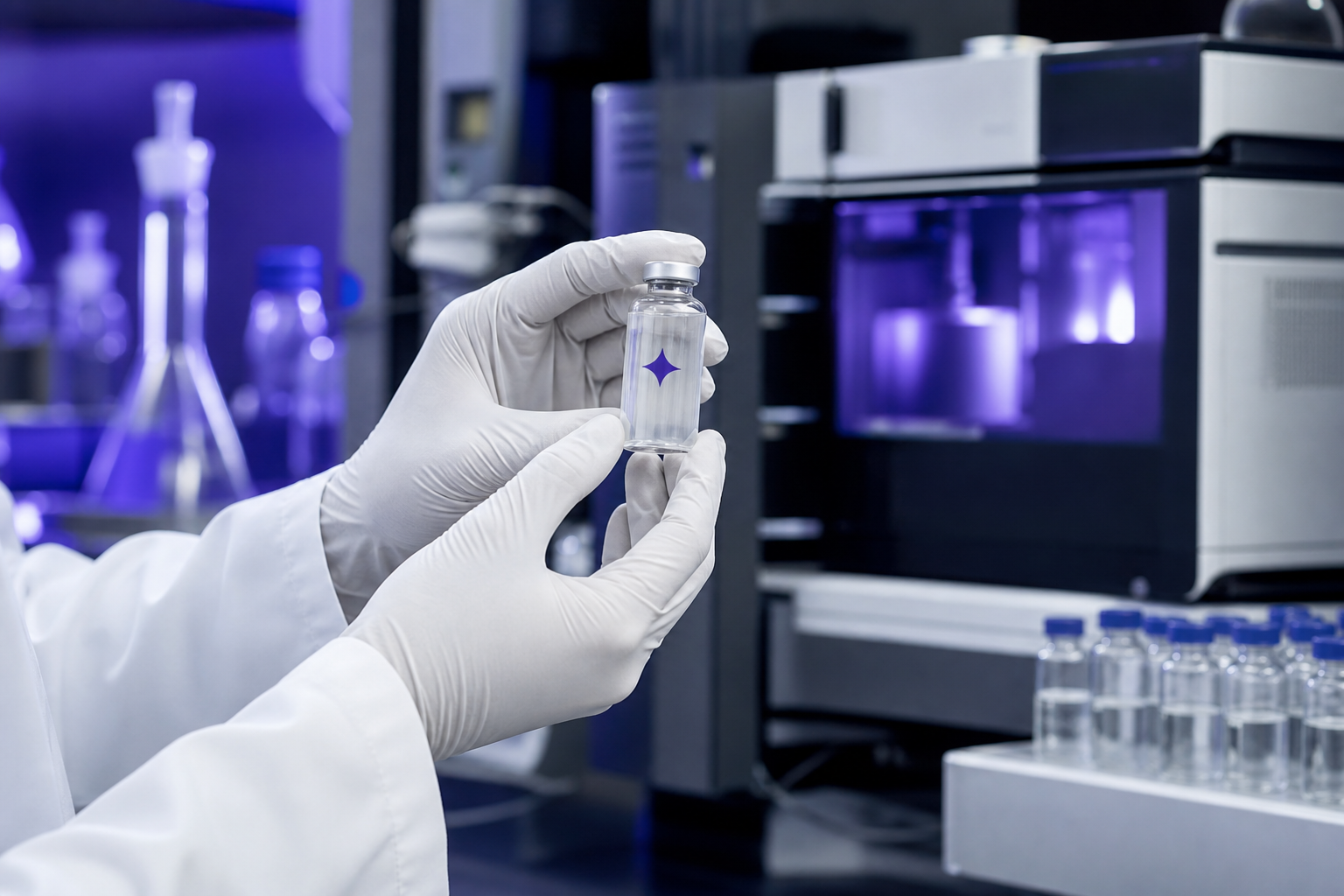
This page is general scientific education. It does not provide dosing, clinical, diagnostic, or treatment guidance.
01 · RESEARCH CONTEXT
Start with the mechanism, not the headline.
Best Peptides for Injury Recovery in 2026: BPC-157, TB-500 & Wolverine Protocol Research sits within a broader body of preclinical and analytical research. A useful reading begins by separating the compound, model, endpoint, and strength of evidence. Results observed in one system should not be treated as proof in another.
For BPC-157, researchers commonly examine pathway-level questions while controlling for assay design, material identity, concentration, and experimental duration.
02 · METHODS & INTERPRETATION
Quality data is part of the experiment.
Reproducibility depends on more than a compelling mechanism. Batch identity, analytical purity, storage history, solvent controls, instrument calibration, and transparent exclusions all shape the result.
Better research begins when provenance and protocol are treated as first-class data.
- Confirm material identity and batch documentation.
- Predefine controls, endpoints, and exclusion criteria.
- Report the model and analytical limitations clearly.
- Avoid translating preclinical findings into clinical conclusions.
03 · QUESTIONS FORWARD
What would make the evidence stronger?
The most valuable next step is often a sharper question: Which endpoint is direct? Which is inferred? Is the reported effect robust across models? Were negative results published? What would falsify the proposed mechanism?
04 · SOURCE STATUS
Primary-source review is still pending.
This preserved route is an editorial draft, not a published evidence review. It remains excluded from search and LLM indexing until topic-specific primary studies, persistent source links, evidence classifications, and a named review date have been added and checked.
Read editorial standards